Thursday, February 01, 2007

Was it right that two guys who placed LED signs around Boston as part of a guerilla marketing scheme for a television show have been arrested?

And why were these guys targeted if this was a plan that went all the way to Turner Broadcasting Corporation and was created by a PR firm?

I don't blame Boston for its reaction to these devices, which were obviously part of a coordinated plan to send a message. Unfortunately, Boston thought the message was something more menacing than "watch our show."

The biggest problem is that there was no communication among the various component companies of Turner Broadcasting. News outlets at Turner continued to carry the story of "suspicious devices" around Boston despite the fact that their colleagues had in fact coordinated the stunt. I imagine that the people who placed these devices allowed the panic to continue for a while before explaining the stunt to authorities because of the chance for more publicity (which has definitely panned out). I don't think there's anything wrong with placing weird devices around, but maybe next time they should inform the police and their fellow news outlets.

Wednesday, January 31, 2007

I was disappointed by the Washington Post's coverage of the recent nightclub shooting in Northwest Washington ("Hundreds Mourn Slain Teenager," January 27, 2007). Even on the same day as publishing a superb letter to the editor pointing out that we must go after the availability of guns if we really want to curb the fatalities from violent crime in this city ("Target Guns First"), the Post publishes another article that ignores gun control as the central issue in this case. Instead, the article ("Hundreds Mourn Slain Teenager") iterates calls for new regulation to "keep children safe," which indicates that the age of the victim is somehow the central issue here. On the contrary, the death of an adult in this case would be just as tragic, and it is the proliferation of guns that should be the focus of all efforts to prevent this kind of event in the future. Furthermore, discussions about whether music or alcohol had anything to do with the death of Taleshia Ford are untenable arguments; in fact, the person at the center of the shooting was deservedly kicked out of the club for smoking marijuana. Without the presence of the gun in the commission of this violent crime, Ms. Ford would probably still be with us.
After a U.S.-EU agreement last year, DHS can no longer automatically pull information on passengers making transatlantic trips, and it now has to ask the airlines for this information. Then, the other intelligence agencies who use the information need to get the info from DHS, rather than being fed the information through an automated system.

Now the issue on the EP agenda is the role of the Belgian organization SWIFT, which has given banking and other financial information about Europeans to the U.S. federal government. Are SWIFT's contributions to the U.S. Automated Targeting System (ATS) a breach of Europeans' privacy?

This is what will be discussed at the EP's miniplenary today. Sophie In't Veld (Dutch D66 member of EP) complains on BBC radio that the data could easily be used for purposes other than anti-terrorism (infectious diseases is on the list, for instance), and wants assurances that the data really is secure. Canada provides adequate legal protection for mistakes in its new PNR agreement with the EU, she says; so far, there are no such protections for Europeans in the U.S. Sophie says that the U.S. has stronger privacy laws than the EU, thus the EP's requests are actually of a limited nature in comparison.

Timothy Kirkhope (UK, Conservative) has said that the EP's position of trying to limit the amount of information shared with the U.S. risks obstructing U.S. access to important pieces of information that could prevent and fight terrorism.
I must now plug Budova Holland, a great renovation company in Eindhoven, Netherlands, whose website is just fabulous (well, I'm biased cause I made it). You can see pictures of the work that the company has done; pictures of carpentry and construction, tilesetting, bathrooms, stonework, and projects abroad (mostly in France) are all available and are updated with new pictures often.

This website was made on a mac with the ".mac" system. The system is made for people who want to have a nice-looking website that is easy to update and that can integrate media from the rest of your computer without "importation" or manual uploading. If you look at enough websites, you'll see that this website is simply a mac template. Updating the site is very easy -- there is no file transfer protocol (ftp) program needed because the subscription to .mac allows you to update changes on the website directly through the website editor software. This software also connects easily with iTunes and iPhoto so that you can drag your pictures or music directly onto the templates.

Of course, this software would never be used to make a high-end, unique website, but it serves the purpose for a small business owner who wants to have a good-looking and easy-to-update website.

This doesn't mean I am a mac fanatic, however. Having a mac, one can run into difficulties. Last summer, my boyfriend and I were in Poland, about an hour outside Warsaw. All attempts to connect his brand new Macbook Pro were futile; neither dial-up nor receiving internet through our cell phones worked, despite long conversations with Orange communications reps in the nearest town. And no other short term internet options were available, so we were forced to live without internet (horrors!) for a while. I am sure that with a non-mac computer, we would have been able to connect just fine.
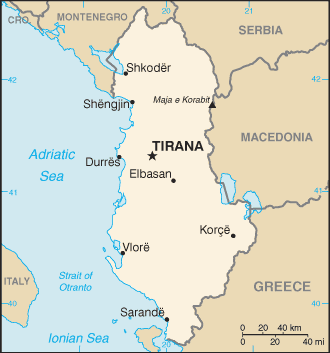
13 CIA agents have been targeted in German warrants in connection with the rendition of German citizen Khaled el Masri from Macedonia on to Afghanistan and then back to Albania once it was realized that he was not the Khaled el Masri they were looking for (NYT).

Plane records have established connections between the Americans who stayed in a hotel in Mallorca and the rendition of el Masri. The names of these 13 people are probably fake, and this warrant will probably function as a political commentary about extraordinary rendition rather than as a tool to place these Americans on trial.

Angela Merkel has told the press that Condoleezza Rice apologized to her about the mistaken rendition of el Masri, as he was not the terrorist suspect the U.S. was looking for. Rice has denied making any apology about the case.

Monday, January 29, 2007

I've always wanted to know what that pool between Williamsburg and Greenpoint Brooklyn looked like, the one that's been closed for years. I found it on googlemaps, and that made me happy. Link to the picture.

McCarren park.

I'm on my way to creating the perfect itinerary to convert the boyfriend who doesn't like DC.

I was in DC this weekend looking for an apartment, and my friend Erika took me to Bistrot du Coin on Connecticut Ave. in Dupont. I'd been there before, but hadn't appreciated it. Only now did I appreciate its noise, its food and its liveliness. It's a great people-watching venue too because there are so many tables.

After dinner we went a block down the street to Russia House, a debaucherous clubhouse-type bar that specializes in vodka and sells Russian and Lithuanian beers (one of the owners is from Klaipeda, Lithuania). The place is cozy; you feel like you're in someone's house, as people sink into the deep couches and spill drinks on the carpet.


Other suggestions for the missionary itinerary are welcome.

Wednesday, January 24, 2007

Shamelessly re-posting items from boingboing, but only because they are super interesting.
A website documenting and fighting the exclusion of foreigners from many Japanese businesses.
I was in Puerto Rico with my boyfriend in January, and we went snorkeling in several places around the island. Our most successful snorkeling was at Steps Beach in Rincon, home to the now threatened -- but once ubiquitous -- Elkhorn coral, which was officially considered endangered in 2006.
So the ONE day that I write about Gardasil on this blog (see directly below this one), I get offered the drug at the doctor's office. I responded by telling my doctor how much I didn't like the grammatical incorrectness of Gardasil's ads (as if that had anything to do with how well the drug worked). She had never thought about "one less" being incorrect, but, she told me, Apple's "think different" ad campaign really got on her nerves.

It took me a second to understand that it's supposed to be "think differently." I guess we all have our mental blocks.
But "think different" could be correct, in the same way that "think France", "think tutus", or think roses" is alright. "Different" as an independent concept, rather than a modifier of "thinking."
This week the Economist features an article called "One less brick in the wall," about China and the press. But it struck me, shouldn't it be "One fewer brick in the wall"? I mean, where is this rule going if the Economist violates it? Perhaps I don't understand the rule of less vs. fewer(?).
If you can count them, then you use "fewer," if it's uncountable (like "water") you use "less". So what's the story?

Literal minded thinks about the subject but doesn't really give me a definitive answer. Tenser the Tensor discusses it too, but I don't agree because I think that "fewer" can be used with a singular noun.

"One fewer wheel than the other cars" for instance.

And there is a reason for this rule. As one poster said:

"Since "less" is also used as an adverb ("less successful"), "fewer" helps to distinguish "fewer successful professionals" (fewer professionals who are successful) from "less successful professionals" (professionals who are less successful)."

And to top it off, there is an entire ad campaign for a drug called Gardasil combating cervical cancer called "One Less."

Tuesday, January 23, 2007

A white member of the House with a majority of black constituents will not be joining the Congressional Black Caucus (Politico).

Stephen Cohen of Tennessee seems to be very mature about the whole issue. Of course he doesn't want to burn the very bridges he is trying to forge. But you have to ask yourself whether the Congressional Black Caucus is under threat of becoming "diluted", enough so that it would have to reject this new House member who is only trying to work with other lawmakers to benefit his constituents. (maybe they are preventing a deluge of white members?) Considering that they haven't had any non-black members up until now, it seems that they are acting too cautiously, and this may send the message that the group is practicing reverse racism.

Now, we have to understand that this is not a question of one half of the population excluding the other half; minorities need to band together sometimes in order have their voice heard, so that they are not drowned out by the majority. I can imagine issues that would be specific to the minority where it might make sense to exclude. "Sickle cell anemia funding" for instance. But even so, Mr. Cohen would still be working for his black consitutents in supporting such initiatives.

What is worrying are statements like the following from Rep. William Lacy Clay (D-Mo): "It's an unwritten rule. It's understood. It's clear [that only African-Americans may belong to the Congressional Black Caucus]."

Unwritten rules are often ones that are embarrassing if they were written down ["we are excluding people from our group on the basis of race"]. Full transparency on just who may or may not belong to the Congressional Black Caucus would be the best way for the group to be honest about how they run their organization, and it would also avoid these kinds of "faux pas" (as the article put it) in the future.
As a follow up to the post about the WashU student who got in to see Michael Devlin, I wanted to weigh in whether this was ethically acceptable or not. If this journalist had represented herself as a family member of Mr. Devlin, we would be outraged and rightly so. She posed as a friend, and "friend" is a very vague term. The holding cell's visiting policies were unfortunately more unclear than Devlin's lawyers would have liked.

We shouldn't be surprised that this lonely man, both in jail and out, had decided to allow a journalist posing as a "friend" to visit him. But the bottom line is that Mr. Devlin was able to choose who was allowed in to talk to him and who he offered information to. He showed an awareness of his choices by telling the journalist that he would not answer certain questions. This journalist exploited the lax policies of the holding facility, and even though the facility's rules were indeed insufficient to keep friends (in the broadest sense of the word) out, she did misrepresent herself.

The interview that resulted from the visits has made him more human to the reading public than he was prior to its publication, which may help him in the long run in his trial. But is it the journalist's right to decide what the public knows about this guy without the review of his lawyers? What if this interview ends up condemning him in court?

This goes back to another recent post about whether more openness and transparency makes journalists' ethically questionnable acts more acceptable to us. More openness is not always desirable; if the journalist is harming the subject (Mr. Devlin) then we need to take a closer look. Is Mr. Devlin able to make decisions about who he does and does not talk to? He sounds like a sane guy, but he also kidnapped two boys, possibly three.

Monday, January 22, 2007

A WashU (yay WashU!) student snagged an interview with Michael Devlin, the kidnapper of two boys over the course of two years, who was recently apprehended in Kirkwood, Missouri, and who is now in the slammer.

"The New York Post article was written by correspondent Susannah Cahalan, a New Jersey native who attends Washington University in St. Louis and once worked for the student newspaper there." (STL Post-Dispatch)
However, she got in to see Devlin by lying about her relationship
(NYPost story.) She reports on such things as what kinds of books Devlin is going to reading in prison, his social life, his work at Imo's pizza.

DC received lots of snowflakes today, which I suffered under as I traipsed from open house to open house in search of a room to live in. I am interested in living in a good place, but not interested in the search it takes to get there.

Thursday, January 18, 2007

The burqini.....a product of Australia mostly intended for Lebanese-Australian women who want to swim but especially those who want to be lifesavers, in order to increase diversity among lifesavers. Lack of diversity has been blamed for ethnic tensions at Australian beaches, especially the 2005 Cronulla riots.
Foreign Service Officers want to serve in Iraq, as a letter in the New York Post from Ambassador J. Anthony Holmes states:

"[It] is simply wrong when he decries the “failure . . . of the State Department (to) . . . get enough volunteers even for its 90-daystints in Iraq.” The fact is that over 1500 State Department employees have volunteered to serve, unarmed, in Iraq since 2003, a figure that represents about 15 percent of the total Foreign Service workforce. Over 300 of our employees are doing their patriotic duty in Iraq now, including dozens working on front-line Provincial Reconstruction Teams in extremely dangerous, “Red zone” combat areas outside of Baghdad. Thus far, despite legitimate concerns about theability of unarmed civilian diplomats to effectively carry outdemocracy-building and economic reconstruction activities in the middle of a war, virtually all of the diplomatic jobs in Iraq have been successfully filled with volunteers."

Wednesday, January 17, 2007

I don't expect the new Identity, Sovereignty and Tradition Group (read: extreme right) in the European Parliament to last. These guys are loners in their daily political dealings. While by and large they are power hungry like any other bunch of politicians -- and the Group will indeed increase their power -- they are more used to being provocative and less used to compromise, especially when compromise entails agreeing with fellow group members from -- horror of horrors -- a country other than their own. The oxymoron of nationalist political parties allying together will eventually cause the breakdown of such a group. In addition, these politicians constantly decry the bureaucracy of an international institution like the EP -- they should watch out or they may be forced to implement bureaucratic schemes of their own to manage their new group.
(EUPolitix on the far right grouping.)

British MEP Ashley Mote is already threatening defection over one Bulgarian's anti-semitic remarks. (EURSOC)

I think we can all agree that it's unethical if a lobbyist pays for a representative's lavish meal or trip if the lawmaker then pursues the lobbyist's goals to return the favor. That hurts the democratic process. However, do we find it unethical if a journalist takes a lawmaker out to a lavish dinner in order to receive privileged information in return? At present, the rules regarding journalists and whether they can pay for the meals of lawmakers are going to be more limited in an effort to curb lobbyists' abuses, including if they work for a media outlet, as the blurb in NYT points out:

"January 16, 2007, 9:17 am
Rules Change
By David K. Kirkpatrick
Lobbyists are not the only ones who wine and dine lawmakers and their staff members. Journalists hoping to lubricate sources sit elbow-to-elbow with lobbyists at the same Washington steakhouses and watering holes. And, perhaps inadvertently, the new ethics rules passed by the House require lawmakers and aides to be very careful about letting reporters pick up the tab.
The new rule bars lawmakers and their aides from accepting meals paid for by employees of companies that also pay registered lobbyists. Among others, that includes journalists working for the major television networks, The Wall Street Journal and The Washington Post. The New York Times Company, however, does not employ a registered lobbyist, so its reporters can still pick up the check" (link)

Would a lawmaker, or anyone else for that matter, be more willing to offer up information to a journalist if they got something of value in return? Offering up information can sometimes come with consequences -- like losing a job or breaking confidences with friends and colleagues. Perhaps people aren't willing to risk these consequences, even for a nice dinner? And perhaps because the aims of journalists are usually in favor of openness and transparency, rather than against it, we shouldn't really care how they get their information and if they have to persuade their sources with dinners and gifts (?).

Tuesday, January 16, 2007

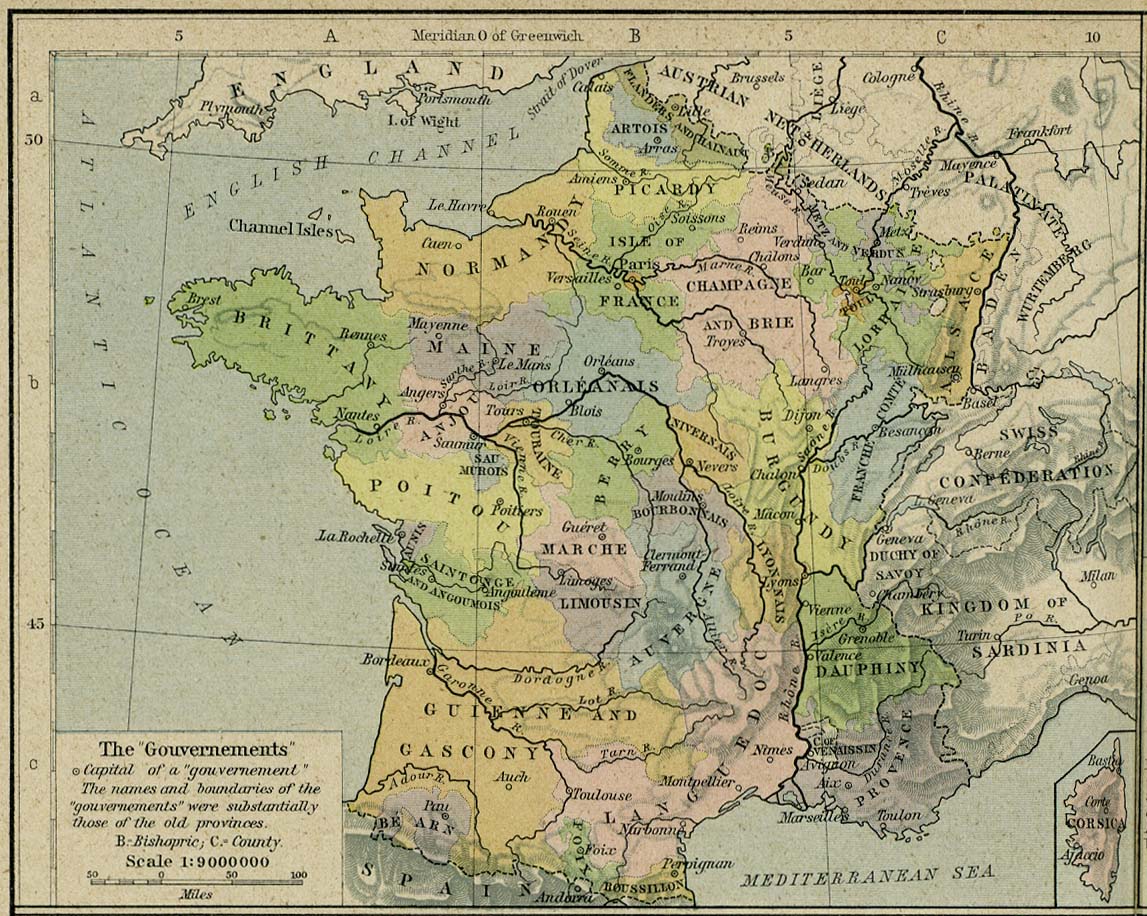
Why does France's proposed merger with Great Britain in 1956 (NYT, tiny article deep inside newspaper) not raise a few more eyebrows? Can you imagine the reaction of each country's respective populations if they were faced with such a merger? The British would finally have access to edible food, sure, but the French would have to call those obnoxious British tourists their countrymen! And Britain would have had access at a much earlier date to convenient retirement communities in Southern France, and perhaps France, with its comparably good weather would have become overrun with British, who would have threatened the purity of their perfect tongue!
On Sunday I watched Paradise Now, a film about suicide bombers which I had been dying to see (no pun intended) ever since it came out last year. Yet I could never find the right mood for watching it. (NYT review) (spoilers ahead).
The film manages to create detailed and plausible scenarios for why these two friends want to become suicide bombers and shows how they prepare for it, while still denouncing the act by including a character who to me embodies life itself and the promise it holds -- Suha, the romantic interest of bomber Said. The seriousness and stoicism of preparing and carrying out the act is broken by mundane events; the camera fails to work after a heartfelt martyr's speech by Khaled, the terrorist organization doesn't prepare for aborting the mission, there is miscommunication with one of its operatives (later Khaled fumes: "why didn't they have cell phones!), and Said is forced to fix Suha's car with a bomb strapped to his chest. This was a great film that manages to describe the extremely personal reasons why these men decide to become suicide bombers while denouncing their decision to do so.
Don't you think Vicky Pollard, the character from the show Little Britain, is underexposed in the United States? (videos)

Yeah but no but yeah but no but yeah but........

Sunday, January 14, 2007

I want to bring the review of Carter's book "Palestine: Peace not Apartheid" in the Book Review section of the New York Times last week. (NYT)

They echo my earlier post, that Carter does do a good job of discussing some of the lesser-mentioned issues in the relationship between Palestine and Israel, but alas he does not offer critique or comment to the Palestinian statements against Israel that he quotes at length. There is just not enough critique of Palestinian statements and actions in the book, whereas criticism of Israel abounds. This is the downfall of Carter's book. In an attempt to bring balance to the debate in the United States, he has brought yet another biased account.

Saturday, January 13, 2007

So today held good news, and with it some bad news. I received the message that my secret clearance came through, and that I can start my new job in early February. Which is great. Much faster than I could have ever hoped. But the Albanians' delay of their elections means curtains for my attempt at observing said election; as a federal employee I wouldn't be allowed to observe, and by the time their election rolls around, I will be just that. stinks.

Friday, January 12, 2007


Pawel and I got back from Puerto Rico on the 1oth, and I have found out in the meantime that the Albanian elections have indeed been postponed to February (as they have to take place by February 20, 2007). The postponement has led to statements from NATO, the EU, OSCE and others urging the Albanians to have a free and fair elections, so the postponement has upped the pressure for the process to run smoothly.


The picture is of the celebrations for Dia de los Reyes, (Three Kings Day) on January 6. The band onstage is playing a song from Buena Vista Social Club, and this was not the only time that I heard Puerto Rican musicians getting mileage out of that music's popularity.

Thursday, January 04, 2007

Every two weeks, Transparentique will look at congressional steps towards cleaning up ethics rules and preventing and fighting corruption. Will the Democratic majority fulfill its election promises? Will they be able to accomplish their goals without a clear majority in the Senate (now that Senator Johnson is out indefinitely)? Will the strategies and rules they implement make a difference?

NYT article on ethics reform in Congress.
Nixon wanted to ruin the foreign service. (CNN)

The reforms Nixon wanted to implement, with the goal of "ruin[ing] it -- the old Foreign Service -- and to build a new one," have been replaced with gradual change in the Service, so that in many ways the current Foreign Service bears less and less resemblance to the old elitist and male-dominated corps of the past.
At the moment, a third of the U.S. foreign service is women, but women make up 50% of incoming classes. First hand I have seen women's disproportionately greater interest in the service, which leads to my prediction that women will make up more than half of incoming classes in the future.

Tuesday, January 02, 2007

It might not be cool to say so, but I love Oprah. Not for the school thing, but because of this program on Challenge Day. Maybe I'm just a sentimental sucker, or an incurable optimist, but I love it. And I do think it's true that people can be alone even in a crowd of people, and that this can be the source of a lot of problems.

Monday, January 01, 2007

Romania and Bulgaria have joined the EU! Congratulations!


I am taking this time to praise the Grand Central light show this year, which was vastly superior to the laser light shows of the recent past. Awesome!
Oprah's lack of fulfillment from giving money to charities has led her to start her own project: a school for underprivileged girls in South Africa. (CNN)

The school and foundation's website has set up something like a wedding registry; you supposedly pay for real things that the students need. This seems to tackle Oprah's feeling of disconnectedness from the results of her past philanthropy.

However, I would think that one aspect of her motivation for starting such a foundation is to streamline the money's path to deserving recipients, so that it doesn't get overspent on the administration of the funds themselves. Has her foundation improved this aspect of philanthropy?

The disclaimer at the bottom of the "registry" says: "Donations do not go directly to girls but to The Oprah Winfrey Leadership Academy Foundation that operates the Oprah Winfrey Leadership Academy for Girls South Africa. Your donation selection is subject to change. It will, however, go toward the Foundation's efforts where needed most."

This website lacks the kind of transparency about philanthropy that I would hope for. It seems impossible that all of the $30 for sports equipment will go to the students; instead, some will go towards paying the salaries of the employees of Oprah's foundation.

Or at least, the website fails to disabuse me of this opinion.

Friday, December 29, 2006

Excellent expose on Noka Chocolates (even the name sounds like bull*#$@) which I got via boingboing. And from the expose you really learn the difference between chocolate makers and chocolatiers, which I still hadn't learned from two years in chocolatier-filled Belgium. I've been praising Wittamer, Galler, etc., when the couverture-makers (Bonnat, Valrhona, etc.) determine the quality of the taste of the chocolate. (link - to Dallas Food article)

Here is a list of alternative brands of chocolate where you will get your money's worth:

Amadei
Domori
Michel Cluizel
Valrhona
El Rey
Bonnat (where Noka actually gets its chocolate and marks up the price a few thousand times)
Then I was wondering where Marcolini, my favorite Belgian chocolate shop with the great packaging, gets its couverture....well, that is quickly answered. Marcolini makes his own couverture (from www.marcolini.be):
"Pierre Marcolini is uncompromising when it comes to choosing the raw materials for his products. Every year, this indefatigable chocolate “gringo” travels the world (Latin America, Mexico, Madagascar, Trinity Island, etc.) in search of cacao beans, the fruit that he uses as his logo.
Not satisfied with bringing back the best beans in the world to his ateliers in Brussels, this alchemist then subtly blends the beans from the different regions and works with original aromas to create unequalled flavours: ganaches made with teas from around the world, Origin “Crus” chocolate bars, etc.The advantage of creating your own coating* is undeniable: real products, rigorously selected ingredients that enhance each of the specialities with their specific flavours to create chocolates that are always different, always original, sometimes audacious, and that put us in mind of the best “Grand Cru” wines.
* Pierre Marcolini manufactures his chocolate himself (coating) using cacao beans that he selects personally. He is among the last three craftsmen working this way in Europe.
The cacao beans selected during his travels arrive at the atelier and are rigorously checked by Pierre Marcolini himself, each “origin cacao bean” must be selected and processed in accordance with its quality.
The manufacturing process begins with roasting the beans to remove any residual humidity and to increase the aroma. The beans are then crushed and the mass that emerges is divided into miniscule particles, which are then ground. This is when the chocolate-making process begins: cacao, cacao butter, sugar and fresh vanilla from Tahiti. "

Sunday, December 24, 2006

Germany will take over the EU Presidency of the Council of Ministers on January 1, 2007, and there are high expectations for this half year. Germany has made plans to present a way forward towards a constitution in June 2007, despite the fact that a compromise seems difficult as some member states want to stick to the old version of the Constitution, while Finland and others have decried "picking apart" the draft in favor of moving forward with reforms like Qualified Majority Voting in the Council without the document. (Euractiv coverage)

This disagreement among member states reflects public opinion, which seems lost among the German government's confident assurances that it will be able to reach a compromise -- supposedly without focus groups and probably in a way that will bypass referenda in the future. (IHT from October 2006) "Convincing" people that the constitution is necessary is fraught with danger because it implies that the majority of votes in the French and Dutch referenda were somehow "wrong" because they did not vote the way Germany and other member states wanted.

Germany has also made the final status of Kosovo a high priority for its Presidency. The Serbian election on January 21 will foreshadow the consequences of whichever recommendation comes forward, and will probably indicate just how contentious an independent Kosovo will be for the region.

This will be a big year for Germany otherwise because it will hold the presidency of the G-8, and will be presiding over festivities celebrating the 50th anniversary of the signing of the Treaty of Rome, one of the first steps towards building the European Union. (German Presidency website)

It's a freaking Agatha Christie mystery trying to figure out what was in those redacted *bleeps* by the CIA on the NYT article this past week. The censure was unwarranted, the authors say, because all the redacted items had already been presented in previous articles.

The authors insist that the U.S. missed an opportunity for a general rapprochement with Iran, especially when Iran assisted the U.S. against the Taliban in Afghanistan following 9/11. But the episodes to support this thesis are missing because of the redactions. However, one guess at one critical redacted paragraph goes like this:
"When Tehran sought a quid-pro-quo to strengthen its own security and offered to exchange captured Al-Qaeda leaders for a small group of senior commanders among the Mojahedin-e Khalq (MEK) cadres in Iraq, the administration refused to consider any such exchange, even though the MEK has been designated a foreign terrorist organization by the U.S. Department of State. The United States backtracked on a promise to disarm MEK troops, and canceled scheduled meetings with Iran, accusing it of harboring al-Qaeda leaders implicated in suicide bombings in Saudi Arabia. "

MEK tries desperately to be seen as a legitimate organization, and it gives out sandwiches to poor assistants in the European Parliament in pursuit of this goal, but it continues to sit on "terrorist organization" lists in both Europe and the United States. However, their efforts may have had some influence here (?).. but the U.S. indecisiveness as noted in the previous paragraph was probably more influenced by the following realization, from a WaPo article in 2003, a fact which has been long forgotten and therefore probably redacted:

"Some Pentagon officials, impressed by the military discipline and equipment of the thousands of MEK troops, began to envision them as a potential military force for use against Tehran, much like the Northern Alliance in Afghanistan. But the MEK is also listed as a terrorist organization by the State Department."

The other major item redacted from the article is mention of meetings between the U.S. and Iran in Geneva in 2003 discussing rapprochement between the two countries, which eventually broke down because both sides accused the other of harboring/failing to disarm terrorists (Al Qaeda for Iran, and MEK for the U.S.). There are other citations relating to the redactions at Raw Story.

Saturday, December 23, 2006

In case you hadn't heard already, the title of book 7 in J.K. Rowlings' Harry Potter series is Harry Potter and the Deathly Hallows. Mugglenet has the full lowdown and overanalysis. I had a wonderful discussion with my old high school friend Val about how we love Harry Potter, and are no longer ashamed about it. I have come to understand that the people who knock Harry Potter haven't checked out J.K. Rowlings inventiveness at creating all the intricacies of an entire world, without it being cheesy. Recently I watched one of the Lord of the Rings movies, and I couldn't believe how ridiculous the dialogues were; pseudo-archaic language is never cool.
I apologize for not writing anything for many days. Pawel, my boyfriend, came on Tuesday from the Netherlands, and since then we have been wearing out our shoes walking across Manhattan and Brooklyn. We've even been able to catch some of my friends even though they have been super busy with work, something I know nothing about.

I am getting closer to going to Albania, however there are pleas from some parties in the country to postpone the election until after January 20, 2007, until the election laws can be properly reformed and with the agreement of the political forces in the country.

Tuesday, December 19, 2006

The verdict on the five Bulgarian nurses is guilty, and they have been sentenced to death. A very sad day for justice; it's also a sad day for diplomacy, as the pressure on Libya to release the nurses was intense. They can appeal though. And the medical evidence (in an article in Nature) shows that the children were infected with HIV before the nurses started working at the hospital, and an HIV expert agrees that HIV was in the hospital before they got there, then the Supreme Court had better take this information into consideration. Unfortunately, Libya isn't very receptive to pressure from the outside, although Libya has asked for compensation from Bulgaria, to no effect.
I am very excited, I have been tentatively assigned to the US contribution to the OSCE's election observation mission to the local elections in Albania on January 21.

These elections are especially interesting because the legislature has failed to agree on improvements in the election laws, and as a result, several left-wing parties have boycotted the vote.

Saturday, December 16, 2006

And speak of the devil, Abu Mazen calls for elections which Hamas has threatened to boycott. The pictures in the NYT slideshow accompanying the article are shocking.
I am about 2/3 of the way through Jimmy Carter's Palestine: Peace Not Apartheid. This book has become controversial in the United States, and one can chalk this up to it being one of the few books that catalogs some of the human rights abuses that Israel has perpetrated against Palestinians. But one can also see where Carter invites criticism. (WaPo article on controversy)

The first controversy is the use of the word "apartheid" in the title. Surely, the title assigns the brunt of the blame to Israel, and it is an un-nuanced label for the relationship between the two countries that evokes more outrage than contribute real understanding of the situation. The word "apartheid" is a loaded word, not an exacting definition, and it should have been avoided. However, the human rights abuses and the isolation of communities by the wall and the border policies are very real.

A little while ago I was telling a friend about the fact that for years Israel has diverted water from the Jordan river to Israel, bypassing Palestine, in addition to closing wells in the Palestinian territories, and that Israelis use many more times as much water as Palestinians, etc.; she informed me that these events are rarely if ever discussed in the U.S. This book puts them out there in black and white; and, as if I need to say it again, criticizing the policies of the Israeli state does not make me or anyone else an anti-semite. Just like criticizing the policies of the U.S. administration does not make you anti-American.

However, I can see where critics could find their fodder. First of all, like my old boss Madame Mastenbroek, Mr. Carter has met with Hamas, most notably prior to the 1996 elections in the PT. This is difficult to reconcile, because, if you see Hamas first and foremost as a terrorist group, then meeting with terrorists is akin to negotiating with terrorists, and all along, meeting with the group gives them legitimacy. On the other hand, if you see Hamas as a political force which has broad support among the Palestinian populous, then meetings encouraging them to participate in the democratic process (as Carter was doing) might give them the impetus to leave violent methods altogether in favor of political solutions to conflict. It is a difficult choice to make; America's support of democratic elections in 2005 and then subsequent de facto rejection of the results (because they favored Hamas) makes the U.S. look very bad. What's the answer, push or pull? Madame Mastenbroek and Carter believe in "pull".

Furthermore, Carter doesn't seem to denounce terrorism enough. He gives Hanan Ashrawi the last word in Chapter 11, as he offers several other statements in the book without comment or critique when they need it. She says:

"So far, they have succeeeded in holding the peace process hostage to this mentality on the one hand. And on the other hand they have provoked tremendous violence by acts of incitement like shelling, bombing, house demolition, uprooting trees, destroying crops, assassinating political leaders, placing all Palestinians under closured in a state of total immobility -- a prison. And then they wonder why some Palestinians are acting violently! And then they want to have the right to exercise violence against the captive population. They they like to make non-violence on the part of the Palestinians a precondition for the Palestinians to qualify for talks, let alone for statehood."

This statement screams for a comment, one that affirms that making apologies for violence (or condoning those apologies, as Carter seems to do here) can never be a constructive part of a peace process.

Another bothersome aspect of the book is the lack of criticism of the way Arafat and his cabinet administered the Palestinian Territories before his death. There was rampant corruption, and money was not spent where it should have been; this should have been noted in the section decrying Israeli confiscation of donated funds to the PLO. And it goes without saying that the links between the PLO and terrorism should be denounced in the book, and yet it is strangely absent.

Thursday, December 14, 2006

Tim Johnson's recent brain hemorrhage and brain surgery have a way of testing us. Democrats are of course worried that if Tim Johnson is not able to continue to serve as senior Senator from South Dakota, that a Republican would be his replacement, upsetting the thin majority that the Democrats have in the Senate. But the focus should of course be on this guy's health, not the political games on Capitol Hill. (CNN)
Amazing, Circumcision Halves H.I.V. Risk, U.S. Agency Finds (NYT). Cicumcision cuts the risk of infection during heterosexual sex by half.

The science behind it is this:

"Uncircumcised men are thought to be more susceptible because the underside of the foreskin is rich in Langerhans cells, sentinel cells of the immune system, which attach easily to the human immunodeficiency virus, which causes AIDS. The foreskin also often suffers small tears during intercourse."

While exciting news, it might also give circumcised men false confidence about their immunity to infection. Acknowledging the psychological impact of such information is a key part of creating strategies to fight the disease.

Furthermore, circumcision is a danger unto itself in unsanitary conditions:

"Every year, some South African teenagers die from infections, and the use of one blade on many young men may help spread AIDS. "

This connection was hard to make in the past because cultural norms confounded making real comparisons between circumcised and uncircumcised groups in Africa:

"Researchers have long noted that parts of Africa where circumcision is common — particularly the Muslim countries of West Africa — have much lower AIDS rates, while those in southern Africa, where circumcision is rare, have the highest.

But drawing conclusions was always confounded by other regional factors, like strict Shariah law in some Muslim areas, rape and genocide in East Africa, polygamy, rites that require widows to have sex with a relative, patronage of prostitutes by miners, and men’s insistence on dangerous “dry sex” — with the woman’s vaginal walls robbed of secretions with desiccating herbs.

Outside Muslim regions, circumcision is spotty. In South Africa, for example, the Xhosa people circumcise teenage boys, while Zulus do not. AIDS is common in both tribes."

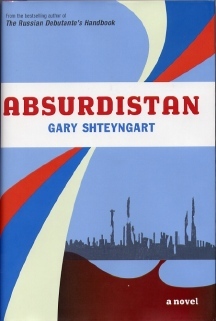
This information will mean that adult circumcisions may be offered to large groups in Africa in the coming years. I am reminded of the main character in Absurdistan, Misha, who is forced by his father to have an adult circumcision and is traumatized by the procedure (in a funny way though). Hopefully, African men will be able to deal with it a little better than a melancholic soul searcher in the grand Russian tradition like Misha.

Wednesday, December 13, 2006


Having listened to a talk by former Ambassador Donald Steinberg yesterday evening, I realize that Darfur needs much more attention than it is getting. Amb. Steinberg said that Kofi Annan has characterized his service as secretary general as primarily revolving around the problems of the Middle East and Darfur. Ban Ki Moon also expects that Palestine and Darfur will be the biggest issues of his tenure.

What we've learned from Rwanda is to call a genocide a genocide. This the U.S. has done; which makes it all the more insidious that no real action has been taken despite this characterization of the situation in southern Sudan.
And as Ambassador Steinberg explained yesterday, the Responsibility to Protect (R2P) makes action that much more possible.

The following excerpts from the 2005 World Summit document which included R2P show how radical this idea is, and how it spurs the international community to action when states fail to protect their citizens from genocide:

"Each individual State has the responsibility to protect its populations from genocide, war crimes, ethnic cleansing and crimes against humanity. This responsibility entails the prevention of such crimes, including their incitement, through appropriate and necessary means."

" The international community, through the United Nations, also has the responsibility to use appropriate diplomatic, humanitarian and other peaceful means, in accordance with Chapters VI and VIII of the Charter, to help protect populations from genocide, war crimes, ethnic cleansing and crimes against humanity. In this context, we are prepared to take collective action, in a timely and decisive manner, through the Security Council, in accordance with the Charter, including Chapter VII, on a case-by-case basis and in cooperation with relevant regional organizations as appropriate, should peaceful means be inadequate and national authorities manifestly fail to protect their populations from genocide, war crimes, ethnic cleansing and crimes against humanity."
(The rest of the excerpt at the Responsibility to Protect - Engaging Civil Society project)

Save Darfur Coalition

Tuesday, December 12, 2006

Speaking of diplomats in New York, why won't they pay the bills? (NYT)
"Two doors away, the United Nations Mission of the Republic of Niger has ignored every water bill it has received since 1998 for its elegant town house, accumulating a debt of nearly $120,000, including penalties. It ignored repeated calls for comment. Eight other foreign missions on the Upper East Side are also in debt, and collectively owe the city about $230,000. "

Monday, December 11, 2006

The Holocaust conference in Tehran, Iran, is creating controversy. Of course it is appalling that a state would actually sponsor an event supporting the idea that the Holocaust never happened. Unfortunately, the organizers have a point when they say that people are not able to talk about this issue, because denying the Holocaust is a crime in several countries in Europe. Withholding citizens' freedom of speech gives Iran an upper hand in this case, and that is a shame; Iran does not deserve it. (WaPo)
Here is a good video from the New York Times about the correlation between levels of corruption and the nationality of diplomats having the most unpaid parking tickets in New York, and which has coincided with threats from the State Department to withhold aid from violating countries. However, the fact that Israel has paid all its tickets doesn't seem to jive with the impression that Israel's politicians (not diplomats) are quite corrupt; that doesn't mean that the country doesn't have the money to pay the tickets they receive.
Yesterday in Amman, Jordan began the Conference of States Parties for the UN Convention Against Corruption (UNCAC). This meeting and the series of meetings to follow it will set out means and goals for fulfilling the requirements of the convention, and will set up sanctions rules and establish how monitoring will be achieved. (UN) (the event)

Today's meetings will allow attendees to discuss the way forward for implementing the convention, and in the coming days asset recovery, technical assistance, and setting up a second States Parties meeting will also be discussed.
Transparency International's recommendations for the conference include calling for civil society involvement in the convention's monitoring mechanism, and that asset recovery and monitoring processes be transparent to allow for full accountability. GOPAC is also holding a side event to inform attending parliamentarians to the conference about key issues on the table.

Saturday, December 09, 2006


Check out these two maps, the first of population density in the United States, and the second of the residence of U.S. fatalities in Iraq. No geographical locations seem to be taking any disproportionate share of the fatalities in the war; it is being felt all over.

Friday, December 08, 2006

What is the most effective way of tackling corruption in the government of any given country?

Why, stage a military coup, of course!!!

That is how Fiji's current leader, Jona Baravilala Senilagakali, describes the reason why he led the recent military coup in that country. (Al Jazeera)


Two book reviews for Xmas/Channukah/Kwanzaa /belated Diwali
First, Carl Hiaasen's Nature Girl, a silly interwoven plot that magically becomes untangled at the end. Not really all that great.
Second, Absurdistan by Gary Shteyngart. This is a better book than the first, which is entirely gratuitous. Absurdistan presents to us the character of "Snack Daddy," who is actually Misha Vainberg, who is really searching for something, but of course he's not really sure what it is. He is an engrossing character, things happen to him that are entirely normal in the Russian mafia- and oil-rich former Soviet republic world that he lives in. But they're not normal for us, and we like him are trying to get our heads around it while we try to see him down a path towards happiness. I'm not finished with this book, but it is humorous and interesting.....fancy that. I especially liked that the author places a parody of himself into the plot of the book, a character whom Misha utterly despises.


Wednesday, December 06, 2006

Anyone who is still talking about how we got into Iraq is totally irrelevant right now. (that means you, Al Gore).
The body of James Kim was just found. He is not alive. I am sad. He never knew that his family was saved. Hopefully they might be able to figure out what happened with him. Did he fall? Hypothermia?

It makes me sad.

However, he was only .5 miles from the Rogue River, in the Big Windy Creek drainage area. That river is filled with rapids, and you have to imagine that the rapids could be heard from quite far away, right? I wonder if he fell, couldn't walk anymore, and thus was stuck out there, even though he meant to go back to the car much sooner.

Here's a satellite image of NF23, the part where they got stuck.
Little Windy Creek, which feeds into Big Windy Creek

oh. The Kims were warned about Bear Camp Road. From CNET. CNET video.

"The Kims were warned that the Bear Camp Road was dangerous this time of year when they stopped into the Wilsonville Chamber of Commerce about 20 miles south of Portland, Ore., on November 25 around 1:30 p.m. PST, said Logan Crozier, a visitor center representative at the office.
The Kims had used Mapquest to map out a route but wanted a scenic route to the coast, Crozier said Tuesday. The visitor center representative who was working that day gave the Kims a map printed off an unidentified Internet site, he said. "She warned them that by the time they got down there (southern Oregon), it would more than likely be dark, and she cautioned them not to take the route," he added. "

And strangely, James Kim left the road he was walking on to walk inside a gorge, where the Big Windy Creek flows. Could he have gone down there because he thought it was warmer there?

The area was carved out a long time ago by geological forces (Bureau of Land Management description):

"Most of these rocks are part of the Rogue Formation. They are a result of lava flows and rocks formed by ancient volcanoes which were active about 140 million years ago. High temperatures and pressure have altered and folded these rocks into a nearly vertical position. Signs of this folding can be seen on the steep canyon walls which have been carved by the powerful forces of the Rogue River over a period of nearly a million years."

Big Windy Creek area is also a place where gold used to be mined. You can see aerial maps of the area here (USGS). Probably this area was more populated in the late 1800s than it is today.
CNN had some further evidence of the mis-spending and fraud that occurred in the aftermaths of Hurricanes Katrina and Rita. Foreign students got federal aid, people got housing compensation payments twice (even though they only lost one house), and FEMA reported found items that are still lost. What a mess.

Tuesday, December 05, 2006

I'm concerned for James Kim, the still un-found father who was stranded in a remote Oregon spot for nine days, and whose wife and two daughters were found on Sunday. (CNET). It just reminds me of times when I've been in a car in a remote place, and you take a strange turn, and you're lost, and it's winter time, and there are no signs or towns, and you think---what could happen? I'm not saying that we should all freak out, but I think we have to have respect for the danger that the wilderness can cause. We all think we are safe with our cell phones; but in such a remote spot, not even those were working. (Hell, my sprint phone doesn't even work at the mall.) They did however give an indication to rescue workers about where the family was.

I'm remembering one time when I flew to Carcassonne (France) and we were going to drive the back way to Prades. The smart way would have been to drive east to the coast, south to Perpignan and then west down the correct valley. Because we were crossing a ridge, we had to go very high up in order to get to the next valley, and up there, on a road hardly anyone ever drove on, there was snow drifting about because of the wind that had few obstacles to keep it from whipping around. We got out and played in the snow (because at lower altitudes there was hardly any). And I'm not going to even talk about the incident of our failed trip to Andorra, and the fun (!) detour we took with the Alfa Romeo, making a dent in it (by braking too fast on a thin coat of snow on the road) which we desperately tried to hide from family members for the rest of vacation to avoid the inevitable ridicule.

The website for the Rogue River-Siskiyou National Forest is surprisingly silent on the Kims and not very alarmist about the road in question, where the car got stuck. It just says:
"12/2006: Forest Road 23 - (Bear Camp Road) is not advisable for winter travel. The Bear Camp Road may be blocked by snow drifts. "

But of course, the family was traveling on the road in November, so maybe that info hadn't been posted yet.

Siskiyou National Forest is also the site of intense bickering over logging permits for areas that have undergone fire, because there is now evidence that logging after a fire hinders the regrowth of trees. (Seattle Times) Oregonians have been opposed to the logging because it might detract from the stunning beauty of this rugged and isolated landscape, especially as the park has up until now had so few roads built through it.
Fiji goes through yet another military coup. Here is the interview with the prime minister (now under house arrest) over the phone with a New Zealand news organization. The president has dissolved the parliament . But the prime minister has a strangely passive attitude to the whole ordeal:

"I will be staying at my residence. What will happen to me I don't know. There is rumour that they are going to take me and leave me on one of the islands close to the capital - actually the island where [a former coup leader] is locked up. So I might end up there but there's nothing much I can do. "
Which is sad, because the guy was elected democratically, and now he has to be detained without trial by an undemocratic leadership that won over the country through brute force. Even though coups have been a part of political history for as long as anyone can remember, their detriment to democratic values should be more appreciated, and they should be more forcefully condemned. Why should elections and rule of law matter if the guy with the bigger stick will always win?
The Earnshaw/Burson Marsteller case escalates, as a formal complaint is issued against Earnshaw the parliamentary expert who was supposed to act impartially on his report on pharmaceutical issues while working the three other days of the week as a consultant for big pharmaceutical companies. (FT)

Even though I see the conflict of interest, Earnshaw is right when he says: "No one is 'independent': people work for businesses, NGOs, governments, political parties, etc. That is why it is important to be transparent...about credentials and experience. . . ultimately, politicians decide, not experts."

And this kind of conflict of interest leads people to think that employing academics are the answer, because somehow they are above it all. This is completely untrue; in the advocacy world of Brussels I have met academics who are more biased and divorced from reality than the organizations they are affiliated with.

Tuesday, November 28, 2006

Okay, enough about the Netherlands.

It's tough to decide whether regulatory burdens hinder business profitability; surely, some are unnecessary and costly. But Eliot Spitzer doesn't think so with regard to the recent reforms following Enron, and I too am inclined to think that more accountability alone is not the reason for business' lack of success. He points to businesses that he helped reform as New York Attorney General, which are now enjoying success. Whether that is directly related to the reforms is not clear, but it does disprove the idea that the reforms he is after will destroy businesses. See the FT's article about governor-elect Spitzer's recent statements about accountability regulations here.

After a long time of floundering through this book by Ian Buruma about Theo van Gogh I finally finished. Finished means that I gave up, because I had a hard time getting through Buruma's romanticized view of anyone and anything connected with the Netherlands. He says he left the country as a young adult because he found it boring, but he never stops pointing out how amazing it is that he PLAYED ON THE PLAYGROUND with people who stayed in their home country and became a part of that small elite which is the Amsterdam intelligentsia. I, on the other hand, am not impressed by the fact that whatever famous writer pushed him off the swings at age 4. His book lacks structure and it also lacks authority; Being from the Netherlands, he actually approaches the subject with more prejudice than the average journalist who is interested in a new topic and goes at it with an open mind. The book makes many fine points, and I won't discount the book completely. But the low point of the book was when he indicated that Mohammed Bouyeri's ideas (the guy who killed Van Gogh) :
"also have a deeply European provenance, to be found in the right-wing politics of the 1930s as well as in a long left-wing tradition of anti-Americanism."
Oh please, the murderer's ideas have zero provenance, because he is not an intellectual like you.
I do appreciate what Buruma is trying to do, to describe for his English-speaking audience what the political and social realities of the Netherlands are right now. But in doing so, he over-intellectualizes and romanticizes the whole thing. Like this sentence about a soccer game in Rotterdam:
"Like all carnivals, this patriotic feast, with shades of a Breughel painting, was a fantasy..."
His descriptions of Ayaan Hirsi Ali seem tinged with Buruma's love of her looks, and they show me that actually Ali fails to represent anyone in her tirades and provocations. And isn't that what elected politicians are supposed to do, instead of going on personal crusades?
His dismissal of Geert Wilders is interesting, seeing as how Wilders won lots of votes in the last election; obviously he is so fixated on Amsterdam in this book that the situation in the rest of the country is incomprehensible to him.

Thursday, November 23, 2006


Here is the final breakdown of the elections in the Netherlands. The PvdA is the big loser in the whole scheme of things, losing lots of votes to SP. But it doesn't mean that SP will necessarily be in the governing coalition.

Wednesday, November 22, 2006


See nos.nl for the final results of the Dutch election, but as of now (the polls closed an hour and a half ago) SP has gotten 25 seats, PvdA 33, CDA 40, and VVD 22, along with the Animal Party - 2 seats, Geert Wilders' party 8 seats, and Christian Union 7 seats. What will the coalition be? Christen Unie seems to play a critical role in the formation of a coalition, like D66 in 2003. Pim Fortuyn's party LPF did not win any seats and Een.nl also came up empty. It looks like the Netherlands is exhibiting a polarization not unlike what we have seen in the United States recently.

I wanna know what happened to the PvdA! Why the drop in the last few weeks? The pension idea did Wouter Bos in in the beginning of polling, but he took it back; so what was the bombshell in the last few weeks? I totally missed it if there was one. I am waiting for analysis from the Dutchies to my inbox....... ;)

Tuesday, November 21, 2006


The latest polls on the Dutch elections tomorrow are on the Volkskrant website. These polls show some large discrepancies: in one, left party SP has 22% of the vote, and in another, it has 32% of the vote (!). And as this rises, the labor party PvdA loses voters as they see the possibility for a left coalition rather than a moderate government come more and more into view. I think the 32% is exaggerated, but even so, it is amazing considering how many people thought that SP's strong performance in the recent local elections was a fluke and could not translate into national voting patterns.

Friday, November 17, 2006

Ouch! Political party funding in Europe definitely needs a closer look, as the secret 14 million GBP loan received by Labour before the last election and the current investigation into peerages show.

Thursday, November 16, 2006


Royal wins the Socialist "primary" in France! Next year the French will all be drinking Pineau de Charentes to celebrate her victory! (now if we could only get a woman in to the same spot in the U.S.)


Grzegorz and Pawel have even participated in the strange annual night time rituals that the Pineaux de Charentes sponsor in Brussels every year....
I like the tasting part the best.

Wednesday, November 15, 2006

It is a surprise to many that corruption factored as the most important issue for why people voted the way they did last week. The pundits have been saying that Iraq was the biggest issue for voters, and it was quite big; but considering how east-and-west coasters are so out of touch with the majority of voters, it's no big surprise that they got this one wrong. (see break down of the biggest issues for voters here, even if there is a conservative bias).

Monday, November 13, 2006


Sometimes you just have to get to the root of the problem. Some are complaining that the the European Court of Auditors' refusal to give a positive Declaration of Assurance (DAS) for EU spending is giving the EU a bad reputation.

Yes, it is, isn't it.

But the whiners (those in the member states) have got it wrong. The Court will give a positive DAS if it is earned. And if member states are not going to take some responsibility for spending, then they will continue to have that DAS hanging over their heads --- until they do take responsibility.
With the Democratic victory in the House and Senate will come a slew of investigations, inquiries, and probably countless hours of testimony about what really happened in relation to just about everything: torture at Guantanamo, fraud and waste in Iraq, how the federal government failed to assist Katrina victims in a timely manner and many many more. And the Republicans' inability to hold the federal government's actions to account will be remembered; see this NYT editorial. However, NYT seems to think they will stay away from investigating how we got to Iraq in the first place.

Democrats are also going to save from certain doom the Special Inspector General for Iraq Reconstruction (and I have to concede, it is nice that Senator Lieberman is a cosponsor of this bill). The work of this Special Inspector has been so little publicized, enough so that James Baker could contend the other day (see earlier post) that little abuse by the big guys like Halliburton and Bechtel had been found; in fact, the Special Inspector has found abuses and has brought to justice those guilty of bribery and shoddy constructions.

Wednesday, November 08, 2006

Working as an official checker and recap checker at the elections yesterday was really interesting. Working with a Republican checker, my job was actually quite important, and especially as a recap checker, I was responsible for taking down and signing off on the results as they were read off the back of the voting machines after the polls closed. In true Greenwich form, at least one person arrived in horse-riding gear to vote.

Seeing the results as they came off the back of the machines also showed me how popular Jodi Rell, now governor-elect, was in the district, as well as senator-elect Joe Lieberman. House of Representatives incumbant Christopher Shays was also very popular in the district (District 11 in Greenwich) -- he won over Democrat Diane Farrell narrowly. Lamont didn't do very well there, but Republican candidate for senate Alan Schlesinger did horribly, despite the large number of Republican voters in that district.

I think Schlesinger's poor performance throughout the campaign in Connecticut shows how the Republicans in Washington were willing to neglect lost causes in traditionally Democratic states. This is exactly what has been the Democrats' downfall in past elections, and Howard Dean was determined to change that with his 50 state strategy this time around. I think it worked; we are now talking about MONTANA as a pickup for the Democrats. And other Republican strongholds were met with great campaigns from Democrats, causing many Republican campaigns to be on the defensive until Election Day.

It was a long day, but overall I was impressed with the quality of people working at the polls. (My sister had a different experience in district 10).

Monday, November 06, 2006

Americans view their country's corruption level about the same as the Belgians do of their country. IHT article on Iraq and the US.
Transparency International's Corruption Perceptions Index was published today. As expected, Iraq is in second to last place, and Americans believe their country is more corrupt than last year. Scandals seem to have taken their toll in Israel as well.

"Countries with a significant worsening in perceived levels of corruption include: Brazil, Cuba, Israel, Jordan, Laos, Seychelles, Trinidad and Tobago, Tunisia and the United States. Countries with a significant improvement in perceived levels of corruption include: Algeria, Czech Republic, India, Japan, Latvia, Lebanon, Mauritius, Paraguay, Slovenia, Turkey, Turkmenistan and Uruguay."
Wouter's Angels

I hope that this is not a real commercial for the Dutch PvdA party, but I am afraid it is. Jan Peter Balkenende giving money intended to care for pensioners to George Bush instead in a secret deal? Oh, so that's why the Netherlands can't pay for pensions and why opponent Wouter Bos has to suggest that some pensioners give up some of their hard earned benefits. All that nonsense about ageing populations is just a cover up for the conspiracy, right?

Here is the video for the debate between Balkenende and Bos that took place a few days ago.

Sunday, November 05, 2006

I put the link to the BeMEP game on the right because I thought it would be a cool thing. Like a model UN for students to put themselves in the shoes of a member of the European Parliament. (If it doesn't include at least 15 coffee breaks a day I will be disappointed; I will be similarly saddened if there are no villas constructed from the per diems collected by MEPs just for showing up at work.) (P.P.S.- one of my favorite quotes, Woody Allen, 90% of life is showing up.)

Well, after looking at this cute game, it seems that I can't play with the other kids: Only Europeans are allowed into the secret cabal that is the European Parliament, and they do this by playing a kind of supranational Dungeons and Dragons.

Way to leave me and everyone else out who has been itching to appreciate the European system!

I shall be expecting the nagging complaints about how nobody in the rest of the world gives the EU the respect it deserves....right .......about ...............now.

Friday, November 03, 2006

Trouble in Taiwan over President's embezzlement case.
It's definitely showing that I read Gawker too much. I read the following article by David Langlieb about the Polish residents of Greenpoint, Brooklyn, and immediately wanted to nominate the author to the Douchebag Hall of Fame (DHOF). The Sun had something to say about it, but I am just amazed at his delusional sense of white-man's burden, although I didn't think that was possible in relation to other white people (the Polish who live in Greenpoint Brooklyn). If you're not making me laugh, Langlieb, you're making me cry. I get that it's supposed to be super clever, but it really wasn't; hence my literalist interpretation of all the things you wrote. Sorry if this makes me seem naive.

Let's break this article down.
Let's start at the end.

"I dream of a Greenpoint where Banana Republic is open all night, where groceries
are ordered over the Internet, and where the churches are converted to mixed-use
parking facilities. Mine is a Greenpoint of the future, sensitive to the desires
of its residents who so desperately need a racquet club and driving
range."

Langlieb is just a yuppie, and if given the chance, would yuppify the whole world; he just hasn't learned to be ashamed of it yet and to hide his ambitions to homogenize one of the last real ethnic enclaves of which Greenpoint is a great example. Go back to New Jersey if you want to go to Banana Republic--they are already ubiquitous as it is. (and do you really need to shop at Banana Republic at 3 in the morning?)

Second, he wants to raise his children "amidst lawyers and investment bankers." Well, Langlieb obviously cares nothing about giving his kids any moral values. Of course, these kids would learn their sense of commitment to social improvement (read: eugenics) from their dear old gentrifying dad.

Third, this guy has a classic case of martyr complex.

"Sure, I could move to SoHo or the Upper East Side like some of my fellow
Haverford graduates who care only about themselves. But those places have
already been saved and they don’t need my help. "

I am so glad SOMEONE around here has taken it upon his shoulders (it is a burden, isn't it?) to single-handedly push all those nasty Polish people out of Greenpoint so that everything can be in your language for God's sake. (“some of the signs aren’t even in English”)

"While the community has several problems, most of them come back to the high
density of Polish people infesting its rowhouses."