A white member of the House with a majority of black constituents will not be joining the Congressional Black Caucus (Politico).
Stephen Cohen of Tennessee seems to be very mature about the whole issue. Of course he doesn't want to burn the very bridges he is trying to forge. But you have to ask yourself whether the Congressional Black Caucus is under threat of becoming "diluted", enough so that it would have to reject this new House member who is only trying to work with other lawmakers to benefit his constituents. (maybe they are preventing a deluge of white members?) Considering that they haven't had any non-black members up until now, it seems that they are acting too cautiously, and this may send the message that the group is practicing reverse racism.
Now, we have to understand that this is not a question of one half of the population excluding the other half; minorities need to band together sometimes in order have their voice heard, so that they are not drowned out by the majority. I can imagine issues that would be specific to the minority where it might make sense to exclude. "Sickle cell anemia funding" for instance. But even so, Mr. Cohen would still be working for his black consitutents in supporting such initiatives.
What is worrying are statements like the following from Rep. William Lacy Clay (D-Mo): "It's an unwritten rule. It's understood. It's clear [that only African-Americans may belong to the Congressional Black Caucus]."
Unwritten rules are often ones that are embarrassing if they were written down ["we are excluding people from our group on the basis of race"]. Full transparency on just who may or may not belong to the Congressional Black Caucus would be the best way for the group to be honest about how they run their organization, and it would also avoid these kinds of "faux pas" (as the article put it) in the future.
Tuesday, January 23, 2007

As a follow up to the post about the WashU student who got in to see Michael Devlin, I wanted to weigh in whether this was ethically acceptable or not. If this journalist had represented herself as a family member of Mr. Devlin, we would be outraged and rightly so. She posed as a friend, and "friend" is a very vague term. The holding cell's visiting policies were unfortunately more unclear than Devlin's lawyers would have liked.
We shouldn't be surprised that this lonely man, both in jail and out, had decided to allow a journalist posing as a "friend" to visit him. But the bottom line is that Mr. Devlin was able to choose who was allowed in to talk to him and who he offered information to. He showed an awareness of his choices by telling the journalist that he would not answer certain questions. This journalist exploited the lax policies of the holding facility, and even though the facility's rules were indeed insufficient to keep friends (in the broadest sense of the word) out, she did misrepresent herself.
The interview that resulted from the visits has made him more human to the reading public than he was prior to its publication, which may help him in the long run in his trial. But is it the journalist's right to decide what the public knows about this guy without the review of his lawyers? What if this interview ends up condemning him in court?
This goes back to another recent post about whether more openness and transparency makes journalists' ethically questionnable acts more acceptable to us. More openness is not always desirable; if the journalist is harming the subject (Mr. Devlin) then we need to take a closer look. Is Mr. Devlin able to make decisions about who he does and does not talk to? He sounds like a sane guy, but he also kidnapped two boys, possibly three.
Monday, January 22, 2007
 A WashU (yay WashU!) student snagged an interview with Michael Devlin, the kidnapper of two boys over the course of two years, who was recently apprehended in Kirkwood, Missouri, and who is now in the slammer.
"The New York Post article was written by correspondent Susannah Cahalan, a New Jersey native who attends Washington University in St. Louis and once worked for the student newspaper there." (STL Post-Dispatch)
However, she got in to see Devlin by lying about her relationship
(NYPost story.) She reports on such things as what kinds of books Devlin is going to reading in prison, his social life, his work at Imo's pizza.

Thursday, January 18, 2007
 The burqini.....a product of Australia mostly intended for Lebanese-Australian women who want to swim but especially those who want to be lifesavers, in order to increase diversity among lifesavers. Lack of diversity has been blamed for ethnic tensions at Australian beaches, especially the 2005 Cronulla riots.
 Foreign Service Officers want to serve in Iraq, as a letter in the New York Post from Ambassador J. Anthony Holmes states:
"[It] is simply wrong when he decries the “failure . . . of the State Department (to) . . . get enough volunteers even for its 90-daystints in Iraq.” The fact is that over 1500 State Department employees have volunteered to serve, unarmed, in Iraq since 2003, a figure that represents about 15 percent of the total Foreign Service workforce. Over 300 of our employees are doing their patriotic duty in Iraq now, including dozens working on front-line Provincial Reconstruction Teams in extremely dangerous, “Red zone” combat areas outside of Baghdad. Thus far, despite legitimate concerns about theability of unarmed civilian diplomats to effectively carry outdemocracy-building and economic reconstruction activities in the middle of a war, virtually all of the diplomatic jobs in Iraq have been successfully filled with volunteers."
Wednesday, January 17, 2007
 I don't expect the new Identity, Sovereignty and Tradition Group (read: extreme right) in the European Parliament to last. These guys are loners in their daily political dealings. While by and large they are power hungry like any other bunch of politicians -- and the Group will indeed increase their power -- they are more used to being provocative and less used to compromise, especially when compromise entails agreeing with fellow group members from -- horror of horrors -- a country other than their own. The oxymoron of nationalist political parties allying together will eventually cause the breakdown of such a group. In addition, these politicians constantly decry the bureaucracy of an international institution like the EP -- they should watch out or they may be forced to implement bureaucratic schemes of their own to manage their new group.
(EUPolitix on the far right grouping.)

British MEP Ashley Mote is already threatening defection over one Bulgarian's anti-semitic remarks. (EURSOC)
I think we can all agree that it's unethical if a lobbyist pays for a representative's lavish meal or trip if the lawmaker then pursues the lobbyist's goals to return the favor. That hurts the democratic process. However, do we find it unethical if a journalist takes a lawmaker out to a lavish dinner in order to receive privileged information in return? At present, the rules regarding journalists and whether they can pay for the meals of lawmakers are going to be more limited in an effort to curb lobbyists' abuses, including if they work for a media outlet, as the blurb in NYT points out:
"January 16, 2007, 9:17 am
Rules Change
By David K. Kirkpatrick
Lobbyists are not the only ones who wine and dine lawmakers and their staff members. Journalists hoping to lubricate sources sit elbow-to-elbow with lobbyists at the same Washington steakhouses and watering holes. And, perhaps inadvertently, the new ethics rules passed by the House require lawmakers and aides to be very careful about letting reporters pick up the tab.
The new rule bars lawmakers and their aides from accepting meals paid for by employees of companies that also pay registered lobbyists. Among others, that includes journalists working for the major television networks, The Wall Street Journal and The Washington Post. The New York Times Company, however, does not employ a registered lobbyist, so its reporters can still pick up the check" (link)
Would a lawmaker, or anyone else for that matter, be more willing to offer up information to a journalist if they got something of value in return? Offering up information can sometimes come with consequences -- like losing a job or breaking confidences with friends and colleagues. Perhaps people aren't willing to risk these consequences, even for a nice dinner? And perhaps because the aims of journalists are usually in favor of openness and transparency, rather than against it, we shouldn't really care how they get their information and if they have to persuade their sources with dinners and gifts (?).
Tuesday, January 16, 2007
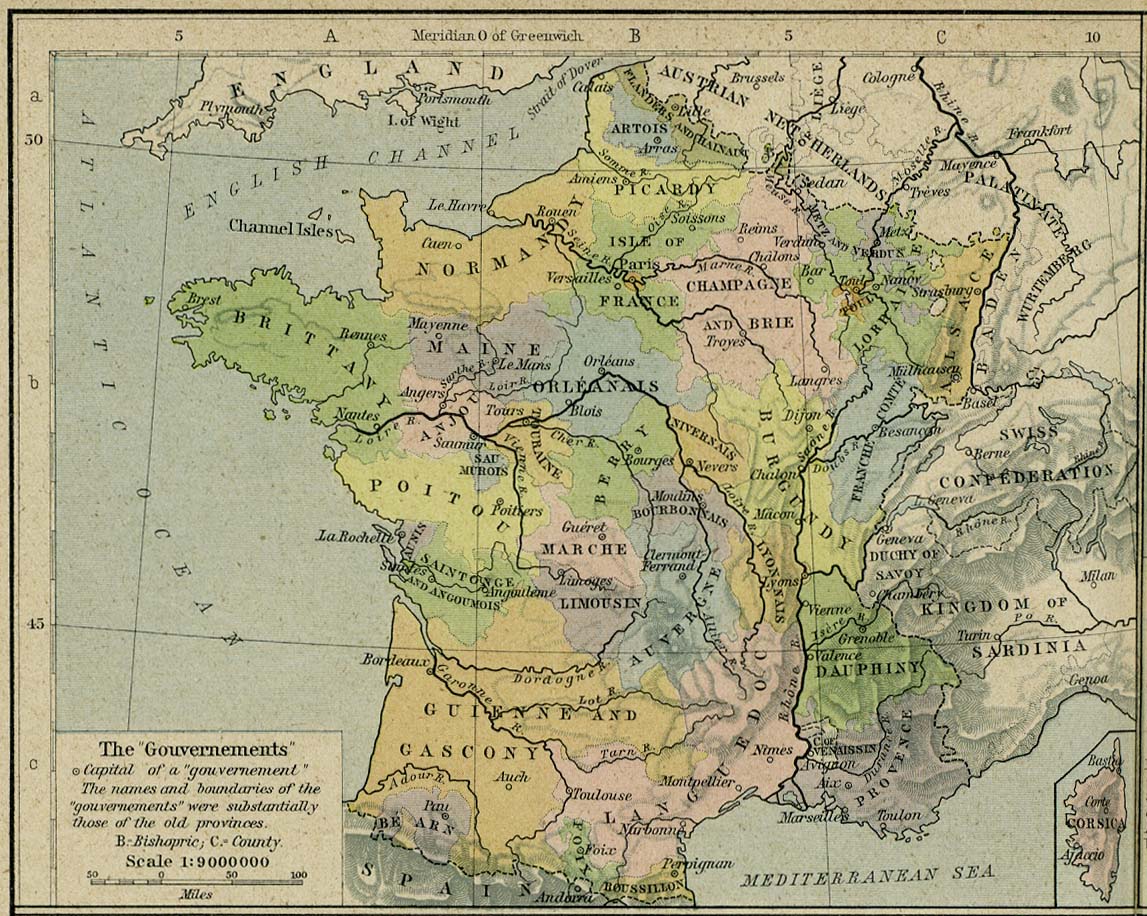 Why does France's proposed merger with Great Britain in 1956 (NYT, tiny article deep inside newspaper) not raise a few more eyebrows? Can you imagine the reaction of each country's respective populations if they were faced with such a merger? The British would finally have access to edible food, sure, but the French would have to call those obnoxious British tourists their countrymen! And Britain would have had access at a much earlier date to convenient retirement communities in Southern France, and perhaps France, with its comparably good weather would have become overrun with British, who would have threatened the purity of their perfect tongue!
 On Sunday I watched Paradise Now, a film about suicide bombers which I had been dying to see (no pun intended) ever since it came out last year. Yet I could never find the right mood for watching it. (NYT review) (spoilers ahead).
The film manages to create detailed and plausible scenarios for why these two friends want to become suicide bombers and shows how they prepare for it, while still denouncing the act by including a character who to me embodies life itself and the promise it holds -- Suha, the romantic interest of bomber Said. The seriousness and stoicism of preparing and carrying out the act is broken by mundane events; the camera fails to work after a heartfelt martyr's speech by Khaled, the terrorist organization doesn't prepare for aborting the mission, there is miscommunication with one of its operatives (later Khaled fumes: "why didn't they have cell phones!), and Said is forced to fix Suha's car with a bomb strapped to his chest. This was a great film that manages to describe the extremely personal reasons why these men decide to become suicide bombers while denouncing their decision to do so.
 Don't you think Vicky Pollard, the character from the show Little Britain, is underexposed in the United States? (videos)
Yeah but no but yeah but no but yeah but........
Sunday, January 14, 2007
I want to bring the review of Carter's book "Palestine: Peace not Apartheid" in the Book Review section of the New York Times last week. (NYT)
They echo my earlier post, that Carter does do a good job of discussing some of the lesser-mentioned issues in the relationship between Palestine and Israel, but alas he does not offer critique or comment to the Palestinian statements against Israel that he quotes at length. There is just not enough critique of Palestinian statements and actions in the book, whereas criticism of Israel abounds. This is the downfall of Carter's book. In an attempt to bring balance to the debate in the United States, he has brought yet another biased account.
They echo my earlier post, that Carter does do a good job of discussing some of the lesser-mentioned issues in the relationship between Palestine and Israel, but alas he does not offer critique or comment to the Palestinian statements against Israel that he quotes at length. There is just not enough critique of Palestinian statements and actions in the book, whereas criticism of Israel abounds. This is the downfall of Carter's book. In an attempt to bring balance to the debate in the United States, he has brought yet another biased account.
Saturday, January 13, 2007
So today held good news, and with it some bad news. I received the message that my secret clearance came through, and that I can start my new job in early February. Which is great. Much faster than I could have ever hoped. But the Albanians' delay of their elections means curtains for my attempt at observing said election; as a federal employee I wouldn't be allowed to observe, and by the time their election rolls around, I will be just that. stinks.
Friday, January 12, 2007

Pawel and I got back from Puerto Rico on the 1oth, and I have found out in the meantime that the Albanian elections have indeed been postponed to February (as they have to take place by February 20, 2007). The postponement has led to statements from NATO, the EU, OSCE and others urging the Albanians to have a free and fair elections, so the postponement has upped the pressure for the process to run smoothly.
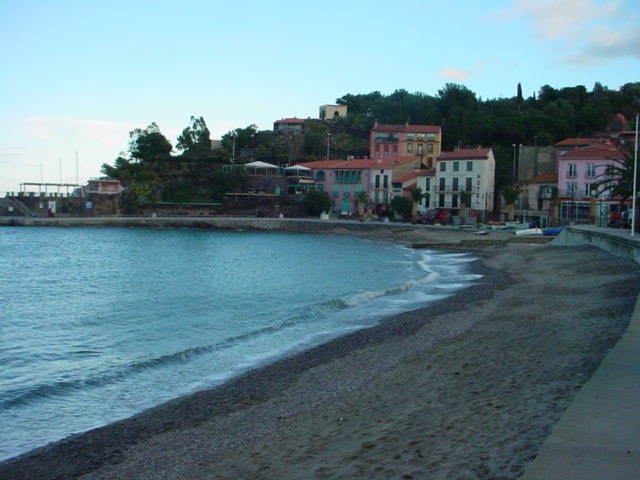
The picture is of the celebrations for Dia de los Reyes, (Three Kings Day) on January 6. The band onstage is playing a song from Buena Vista Social Club, and this was not the only time that I heard Puerto Rican musicians getting mileage out of that music's popularity.
Thursday, January 04, 2007
Every two weeks, Transparentique will look at congressional steps towards cleaning up ethics rules and preventing and fighting corruption. Will the Democratic majority fulfill its election promises? Will they be able to accomplish their goals without a clear majority in the Senate (now that Senator Johnson is out indefinitely)? Will the strategies and rules they implement make a difference?
NYT article on ethics reform in Congress.
NYT article on ethics reform in Congress.
 Nixon wanted to ruin the foreign service. (CNN)
The reforms Nixon wanted to implement, with the goal of "ruin[ing] it -- the old Foreign Service -- and to build a new one," have been replaced with gradual change in the Service, so that in many ways the current Foreign Service bears less and less resemblance to the old elitist and male-dominated corps of the past.
At the moment, a third of the U.S. foreign service is women, but women make up 50% of incoming classes. First hand I have seen women's disproportionately greater interest in the service, which leads to my prediction that women will make up more than half of incoming classes in the future.
Tuesday, January 02, 2007
It might not be cool to say so, but I love Oprah. Not for the school thing, but because of this program on Challenge Day. Maybe I'm just a sentimental sucker, or an incurable optimist, but I love it. And I do think it's true that people can be alone even in a crowd of people, and that this can be the source of a lot of problems.
Monday, January 01, 2007


Oprah's lack of fulfillment from giving money to charities has led her to start her own project: a school for underprivileged girls in South Africa. (CNN)
The school and foundation's website has set up something like a wedding registry; you supposedly pay for real things that the students need. This seems to tackle Oprah's feeling of disconnectedness from the results of her past philanthropy.
However, I would think that one aspect of her motivation for starting such a foundation is to streamline the money's path to deserving recipients, so that it doesn't get overspent on the administration of the funds themselves. Has her foundation improved this aspect of philanthropy?
The disclaimer at the bottom of the "registry" says: "Donations do not go directly to girls but to The Oprah Winfrey Leadership Academy Foundation that operates the Oprah Winfrey Leadership Academy for Girls South Africa. Your donation selection is subject to change. It will, however, go toward the Foundation's efforts where needed most."
This website lacks the kind of transparency about philanthropy that I would hope for. It seems impossible that all of the $30 for sports equipment will go to the students; instead, some will go towards paying the salaries of the employees of Oprah's foundation.
Or at least, the website fails to disabuse me of this opinion.
Subscribe to:
Posts (Atom)